Cultural Proximity: Exploring the Common Ground Between Sydney, London, and Hanoi
By JoeVu, at: Sept. 3, 2025, 9:18 p.m.
Estimated Reading Time: __READING_TIME__ minutes

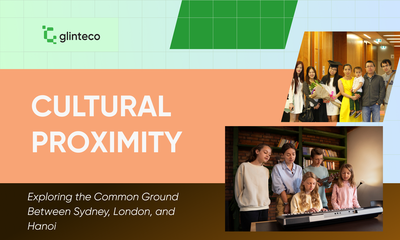
In the early days of global outsourcing, "offshore" often meant "culturally alien". Western companies struggled with massive gaps in social norms, business etiquette, and lifestyle expectations. But today, the relationship between Western tech hubs and the Vietnam IT workforce is defined by a surprising degree of cultural proximity.
Saigon (Ho Chi Minh City) and Hanoi have evolved into cosmopolitan tech centers that feel strikingly familiar to a visitor from Sydney or London. This isn't accidental; it is the result of a massive educational bridge and a shared entrepreneurial DNA that makes Vietnam software outsourcing a partnership of peers rather than just a vendor-client relationship.
The Education Bridge: A Nation of Global Alumni
The strongest link between Vietnam and the West is its students. As of 2025, Vietnam remains one of the top 5 source countries for international students in both the United States and Australia. With over 31,000 Vietnamese students in the U.S. and 36,000 in Australia, a significant portion of the country's technical leadership was educated in Western lecture halls.
The Professional Insight: When you speak with a senior architect at a Vietnamese firm, there is a high probability they spent four years in Melbourne, Seattle, or London. They didn't just learn Java; they learned how Westerners manage projects, how they debate ideas, and how they define "quality." This creates a layer of "Cultural Translators" who bridge the gap for their local teams, ensuring that Western business requirements aren't just translated, but understood.
The Shared Entrepreneurial Spirit
There is a specific "hustle" in Saigon that mirrors the energy of a Silicon Valley startup. Following the Doi Moi economic reforms, Vietnam embraced a market-oriented mindset that aligns perfectly with Western capitalism.
Like Australians and Americans, Vietnamese professionals value:
-
Social Mobility through Merit: Success is seen as a result of hard work and technical skill, not just inheritance.
-
Pragmatism: There is a "get it done" attitude. If a process is blocking progress, a Vietnamese developer is more likely to find a creative workaround than to wait for permission.
-
The Rise of the Middle Class: Vietnam has the fastest-growing middle class in Southeast Asia, projected to reach 44 million people by 2025. This means your developers share the same lifestyle aspirations, home ownership, quality education for their children, and a passion for global tech trends as your local team.
Cosmopolitan Tech Hubs: The "Saigon Familiarity"
If you were to walk into a high-end coworking space in District 1 of Ho Chi Minh City, you would see the same ergonomics, the same MacBook Pros, and the same craft coffee culture you’d find in Shoreditch or Surry Hills.
The presence of over 2.3 million Vietnamese-Americans and 330,000 Vietnamese-Australians has created a circular flow of culture. This "Viet Kieu" (overseas Vietnamese) population frequently returns to start companies, bringing Western management styles with them. This makes the IT workforce in Vietnam exceptionally comfortable with Western tools (Slack, Jira, Miro) and Western social norms.
Frequently Asked Questions (FAQs)
Is the cultural proximity enough to ignore the language barrier?
No. While cultural values align, language remains a skill to be managed. However, because 47% of Vietnamese students in the U.S. study STEM, their technical English is often superior to their conversational English. In a code-first environment, this is usually the more important metric.
How do Vietnamese developers feel about Western "Directness"?
As we discussed in The Yes Paradox, directness can be a challenge. However, the "Global Alumni" generation actually appreciates Western directness because they see it as efficient. The key is to frame direct feedback as "Professional Optimization" rather than "Personal Criticism."
What is the best way to build rapport with a Vietnamese team?
Food and family. In Vietnam, business is personal. Taking the time to ask about a team member's family or discussing the nuances of Vietnamese cuisine (which is globally beloved) goes further than any "team building" exercise.
Does the "Collectivist" culture in Vietnam clash with Western "Individualism"?
It actually complements it. Western individualism drives the vision, while Vietnamese collectivism drives the execution. A Vietnamese team is often more cohesive and willing to "crunch" together to meet a collective deadline than a highly individualistic Western team might be.
The Bottom Line
Cultural proximity is the "silent optimizer" of a tech partnership. When your offshore team shares your aspirations, understands your humor, and respects your educational background, the friction of distance begins to disappear. Vietnam isn't just a place to find "resources"; it’s a place to find cultural counterparts.