Your Best Intake Person Can Handle 20 Cases a Day. That's the Problem.
By nhungnt, at: May 2, 2026, 3:52 p.m.
Estimated Reading Time: __READING_TIME__ minutes
It's 8:47 AM on a Monday. Your intake coordinator is on her second coffee, staring at three open tabs: the new-client form from your website, your CRM, and the case management system your operations team actually works in. The form has 42 fields. She's about to spend the next 25 minutes copying data from tab one into tabs two and three, one field at a time. By lunch, she'll have done this six more times. By Friday, she'll have done it 80 times.
This is one of the most expensive workflows in your business, and almost nobody talks about it.
The four hidden costs
When we talk to service businesses (law firms, accountants, agencies, professional services) manual client intake comes up again and again. Not as a strategic problem, but as background noise. "It's just what intake people do." Except when you actually look at the numbers, there are four costs stacking up:
1. Time. A skilled intake coordinator can realistically handle around 20 cases per day if they're doing it manually and carefully. That's it. Anything more and quality drops. At 20 cases per day, that's a hard ceiling on growth as you can't take on more clients without hiring more intake staff.
2. Errors. A human copying 42 fields across 3 systems will get something wrong. Typos in VIN numbers, wrong dates, misspelled email addresses, dropped phone digits. We've seen real cases where a single misspelled email meant a client never received their engagement letter and the firm lost the matter entirely. The cost of one such mistake usually dwarfs a month of salary.
3. Delay. Even when intake works perfectly, it's slow. A client who fills out your form at 9 PM Sunday doesn't actually get processed until Monday afternoon. In sectors where time-to-engagement matters (legal, claims, medical) that 16-hour gap is when your competitor calls them.
4. Burnout. This is the cost nobody models. Highly skilled people doing repetitive data entry every day get worn out, then they leave. Recruiting and training a replacement costs six weeks and tens of thousands of dollars. We've seen firms cycle through three intake coordinators in a single year, not because they're bad hires, but because the job they were sold isn't the job they're doing.
Why service businesses get hit hardest
If you're running a SaaS company collecting standard signup data, manual entry is a minor annoyance. If you're running a service business, it's a structural problem.
Three reasons:
- High-touch data. Your intake forms don't just collect name + email. They collect case facts, vehicle histories, financial circumstances, timelines, documents. The data is non-standard, often free-text, and requires judgment to map into the right fields.
- Multiple systems. Most service businesses run a CRM (Keap, HubSpot, Salesforce) on the marketing side AND a domain-specific system on the operational side (ActionStep for legal, Xero or MYOB for accounting, project management tools for agencies). These rarely talk to each other natively. Your intake staff becomes the integration layer, which is an expensive way to wire two systems together.
- Regulated. In law, finance, and healthcare, errors aren't just embarrassing, they're liability events. Every data-entry mistake is a small compliance risk. The risk compounds with volume.
What's actually possible now
Three things changed in the last 24 months that make this problem solvable in a way it wasn't before:
- CRMs now expose webhooks for almost every event. When a new file or contact lands in Keap, your systems can be notified in real time (no polling, no delays)
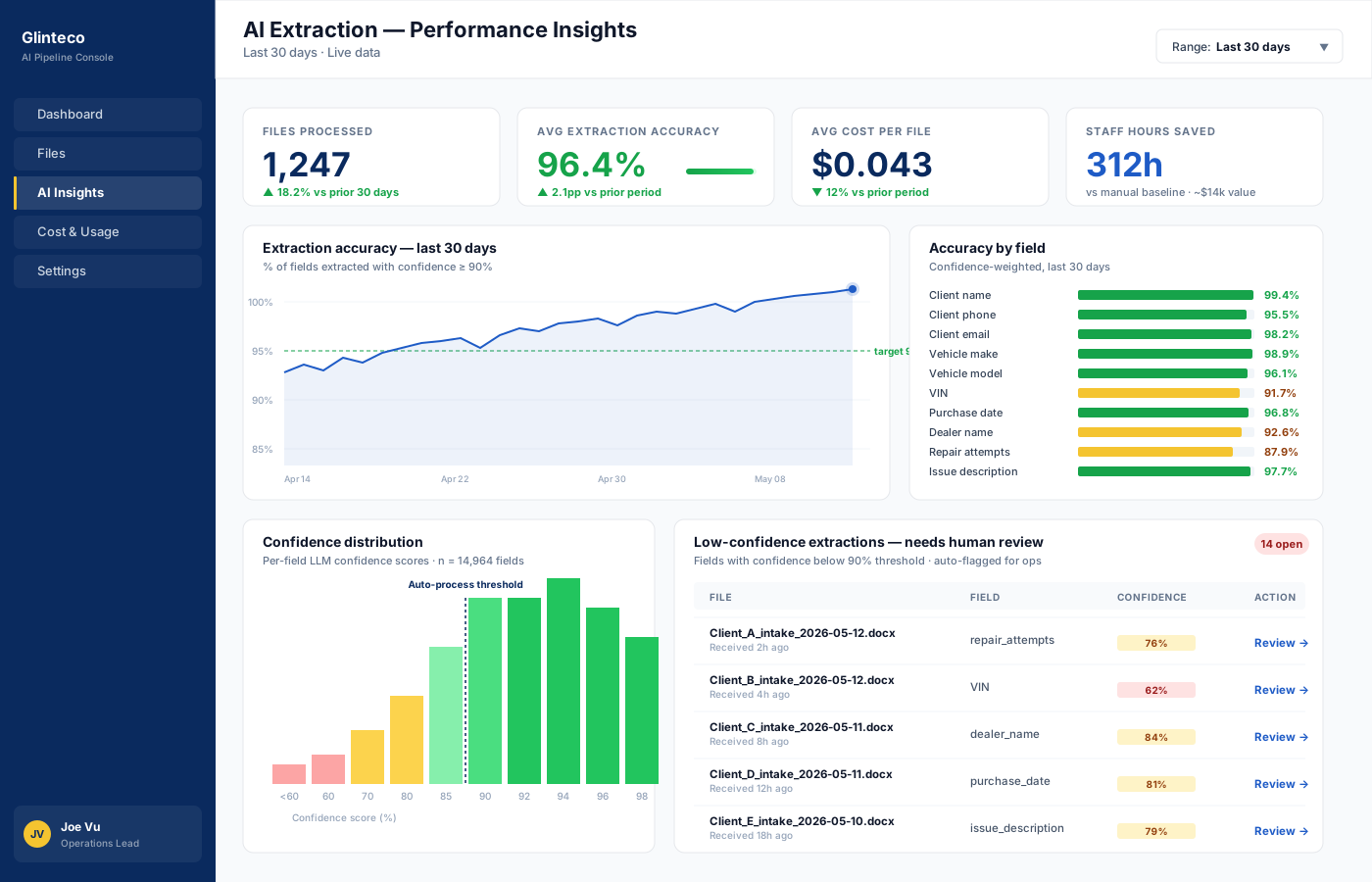
- AI models extract structured data reliably. Not 60% reliable like 2023, actually 95%+ reliable on well-scoped fields, with confidence scoring on the edge cases.
- Domain-specific APIs are mature. Platforms like ActionStep let you create matters, contacts, and custom fields programmatically. The wiring is plumbing now, not invention.
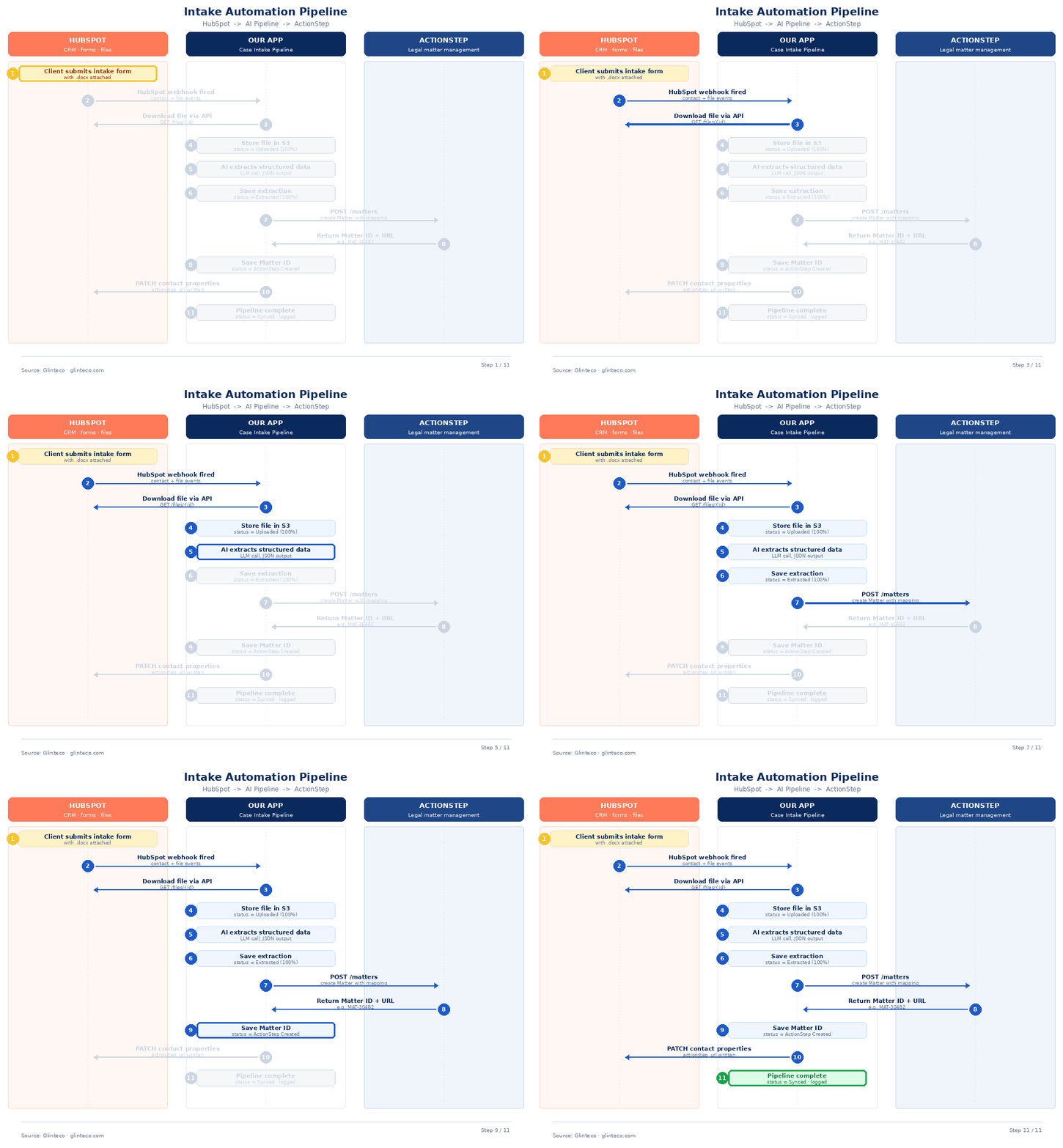
Put these three together and you get a pipeline that:
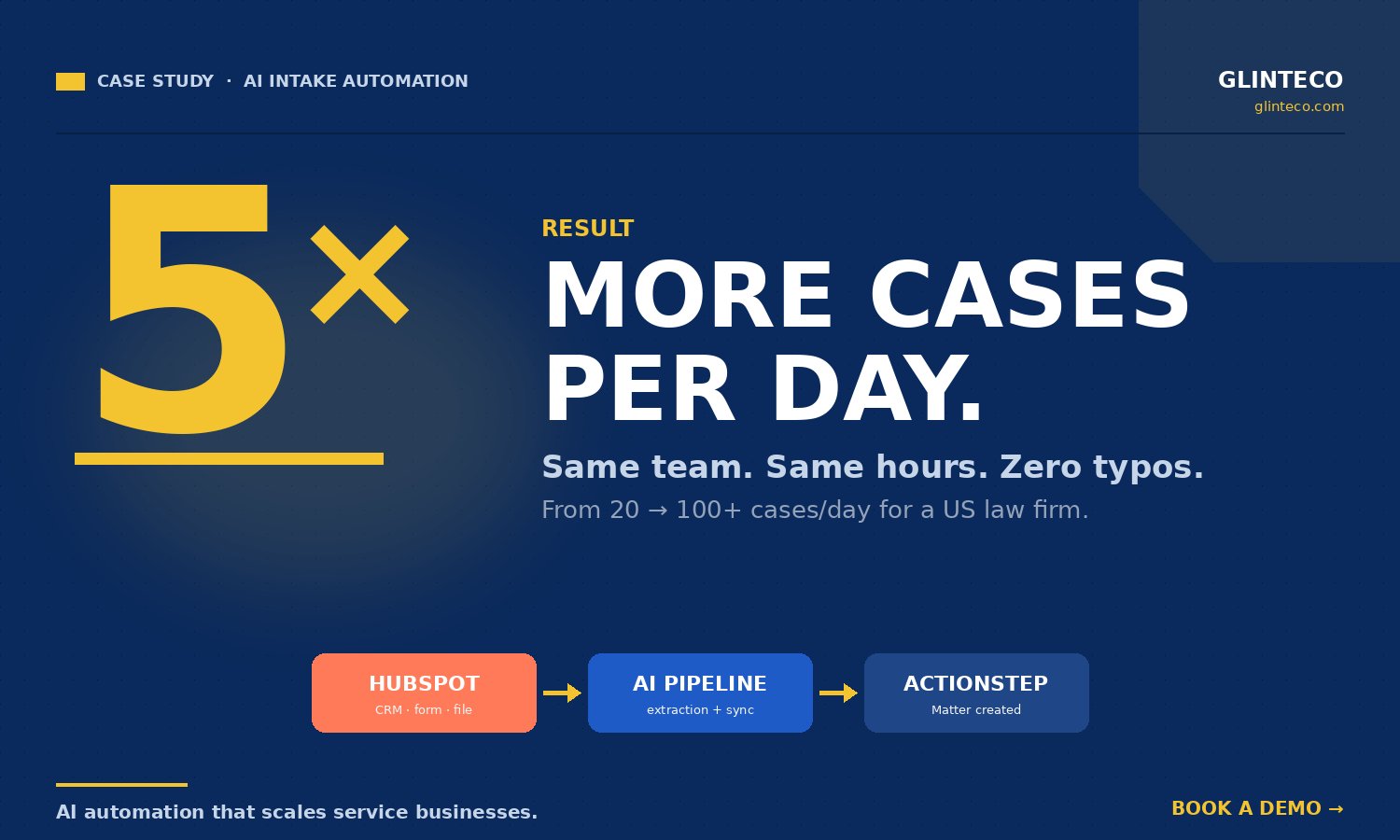
- Receives a new client file the moment it's created in your CRM
- Extracts every field automatically using AI
- Creates the matching record in your case management system
- Updates the CRM with a link back to the case
- Surfaces only the failures for human review
- Runs 24/7, retries automatically, never gets tired, never typos a VIN
Cost: one-time build. Runs forever. No ceiling on cases per day.
We recently built exactly this kind of pipeline for a US-based lemon law firm with multi-state coverage. The same intake person can now process more than five times the cases per day, with fewer errors than before. Same person, same hours, just no longer doing the part of the job that drained her.
The bottom line
If you're running a service business and your intake person is still acting as the integration layer between your CRM and your case management system, you're paying for that decision every single day. The fix isn't more headcount. It's wiring.
Next week, I'll break down exactly how this pipeline works, the webhooks, the AI extraction layer, the retry logic, and the dashboards we built so operations leaders can sleep at night. If you want a preview, book a 30-minute call and I'll walk you through it.